

-
Call
+91 8007730004
-
Email - India
-
Email - Global
Thermic Fluid or Water Heating & Cooling Systems
Thermic Fluid or Water Heating & Cooling Systems
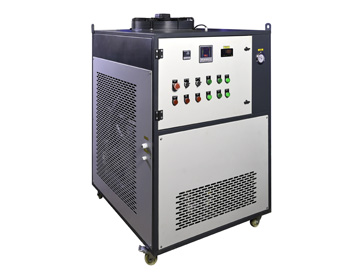
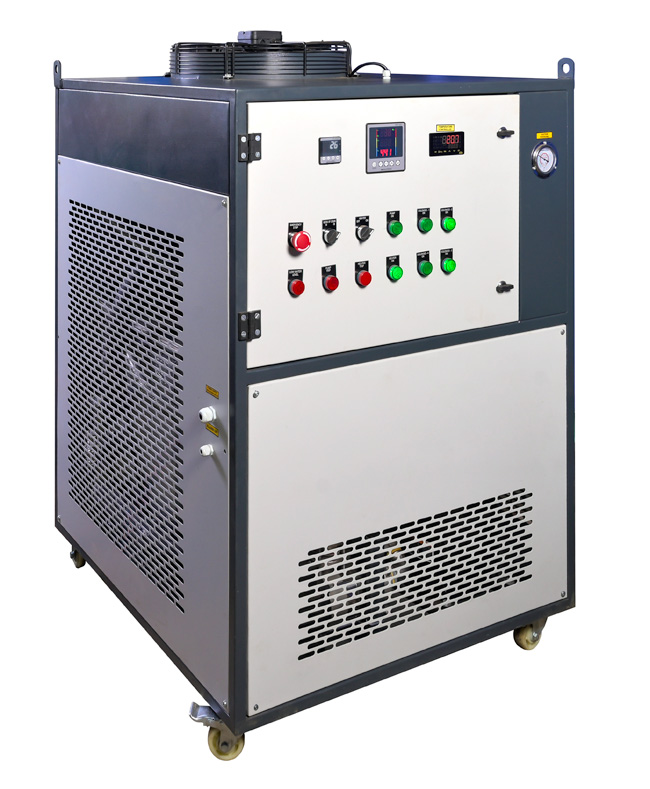
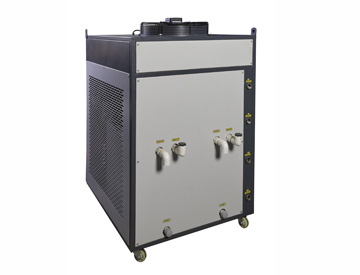
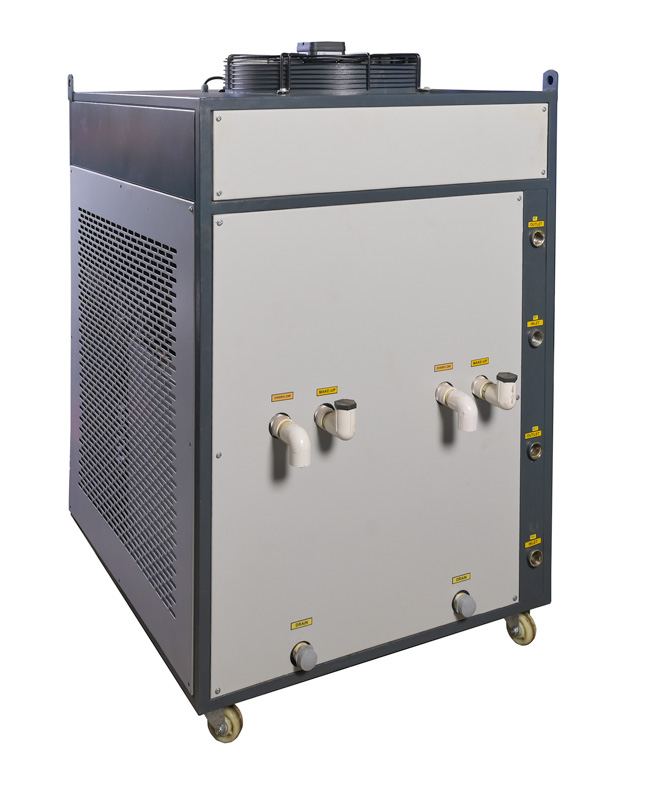
Thermic Fluid or Water Heating & Cooling Systems
A Thermic fluid / Water heating system—also called a Thermal oil or Hot oil / Water system—is an efficient, closed-loop setup designed to transfer heat without the high pressures and corrosion risks associated with steam systems. The same concept also supports cooling applications via heat exchangers.
ENCONPUNE Energy and Air Solution designs and manufactures Thermic Fluid Heating & Cooling Systems engineered for precise temperature control in industrial process applications. The system is designed for safe, stable, and energy-efficient heating and cooling using various thermic fluid / Water as the heat transfer medium.
Engineered Design & Construction
The system is designed with a compact footprint and robust construction, making it suitable for continuous industrial operation. Stainless steel construction ensures compatibility with thermic fluids and long-term resistance to thermal stress.
Integrated heating and cooling circuits allow precise temperature regulation, supporting stable and repeatable process conditions.
we deliver engineering-focused thermal systems designed for safety, efficiency, and long-term performance. From material selection to system integration, every thermic fluid heating and cooling system is built to meet real industrial operating conditions and supported by professional technical expertise.
Here's how it works and what makes it valuable:
Working
1. Heating the FluidA heater-typically immersed coil-type-heats the thermic fluid (specialized oil)(max up to 390°C) / Water (max up tob
85 °C)
2. Circulation Through a Closed Loop
A pump circulates the heated fluid through insulated pipes to the process equipment.
3. Heat Transfer
The hot fluid transfers / gains heat via heat exchangers to process media (air, water, products) without direct contact.
4. Return and Reheating / Cooling
After heat transfer, the fluid returns to the TF heater / cooler to complete the cycle.
5. Expansion & Deaeration
An expansion tank—often also a deaerator—accommodates fluid expansion (during heating cycle), removes dissolved gases, and protects against overheating.
System Components:
Based on industry sources, key parts of a thermic fluid system include:
Heaters & Heating Chamber Provides controlled heat generation.
Cooling Unit & Cooling Chamber Provides controlled cooling.
Heat Exchanger Coil Transfers heat effectively to the thermic fluid.
Pump(s) Typically centrifugal or Gear Pump for efficient high-flow circulation.
Expansion/Deaerator Tank Manages thermal expansion and removes air / gases.
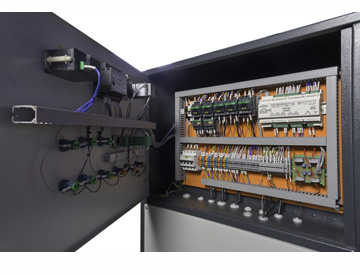
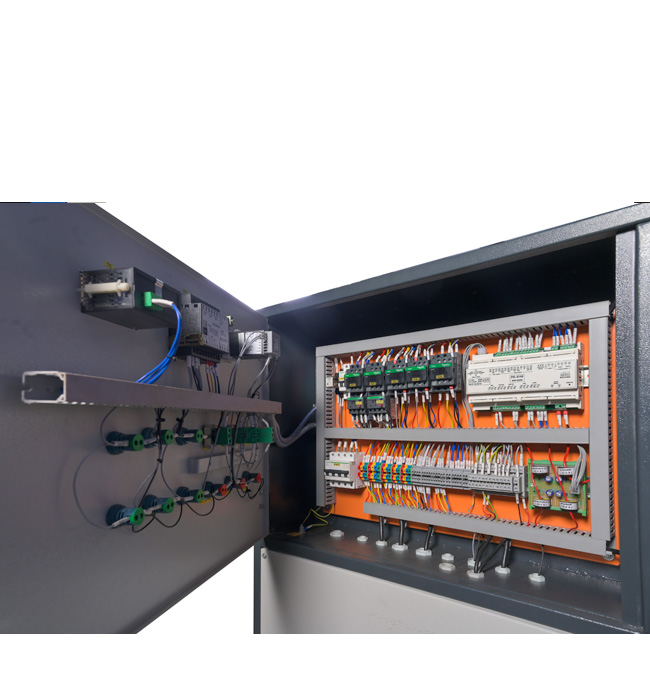
Control Panel & Safety Instruments Monitor/adjust temperature, pressure, flow, include alarms and interlocks.
Insulation and Piping Insulated piping minimizes heat loss; materials like SS or steel are preferred to avoid oxidation.
Component / Feature |
Description / Benefit |
Heater (burner or electric) |
Provides heat to the thermic fluid / Water |
Pump & Piping |
Circulates fluid in a closed, insulated loop |
Expansion Provision |
Handles thermal expansion and removes air / gases |
Control Instruments |
Ensures safe, automated operation |
Heat Exchanger |
Transfers heat to the process (adds heat or removes heat) |
Insulation & Materials |
Maximizes efficiency and fluid life and quality |
Cooling Loop (optional) |
Enables indirect and fast cooling after heating cycle |
Performance Specifications |
For Thermic Fluids Temp: up to 300-400 °C; Pressure: low; Efficiency: >90-95%; Fuel-flexible
For Water Temp: up to 85 °C; Pressure: low; Efficiency: >90-95%; Fuel-flexible |
Operating Parameters :
| Flow Rate | 20 LPM to 200 LPM |
| Temperature | (-)10 to (+)390 °C For TF Systems and (-)10 to (+)85 °C for Water Systems |
| Pressure | From 1 kg/cm² (A) to 5 kg/cm² (A) |
| MOC/td> | Stainless Steel |
| Powerr | 5 KW TO 40 KW |
| Phase | Single Phase / Three Phase |
Standard models
Model |
Rated Power KW |
Max. Working TF Temperature Heating / Cooling °C |
Max. Working Water Temperature Heating / Cooling °C
|
ENHC 5 |
5 |
350 / (-)10 |
85 / (+)10 |
ENHC 10 |
10 |
350 / (-)10 |
85 / (+)10 |
ENHC 15 |
15 |
350 / (-)10 |
85 / (+)10 |
ENHC 20 |
20 |
350 / (-)10 |
85 / (+)10 |
ENHC 30 |
30 |
350 / (-)10 |
85 / (+)10 |
ENHC 40 |
40 |
350 / (-)10 |
85 / (+)10 |
Salient Features of Thermic Fluid Systems:
High Thermal Efficiency : With closed-loop design and minimal losses, efficiency can exceed 90 -95%.
Lower Pressure, Higher Temperatures : Can safely reach 300 , 390 at near-atmospheric pressure.
Better Temperature Control & Uniform Heat Precise control ensures consistent process performance.
Fuel Flexibility Supports diesel, gas, electric, etc.
Low Maintenance & Long Life Less scaling, no steam systems, and fluid degradation is slow with proper handling.
Safety Advantage Eliminates high-pressure risks and reduces site hazards like boiler explosions.
Eco-Friendly Options Electric models offer clean, low-emission heating; synthetic oils can be recycled.
Cooling with Thermic Fluid Systems- Though primarily used for heating, thermic fluid loops can also support cooling:
A temperature control loop can integrate a heat exchanger to remove heat from process streams, enabling precise temperature regulation. This is a manual shifting mode from heating cycle to cooling cycle.
Precise Control- Accuracy of temperature controller is in the range of +/- 1°C.
Portable Unit made for indoor applications.
Typical Industrial Applications:
Thermic fluid systems are widely used for various applications requiring indirect heating and immediate fast cooling in industries such as:
Food Industry
Chemical and specialty chemical plants
Plastic and rubber processing
Pharmaceutical and industrial manufacturing processes
Pilot plants and controlled temperature applications
Labs and Services
Textile Industry
Distillation Applications